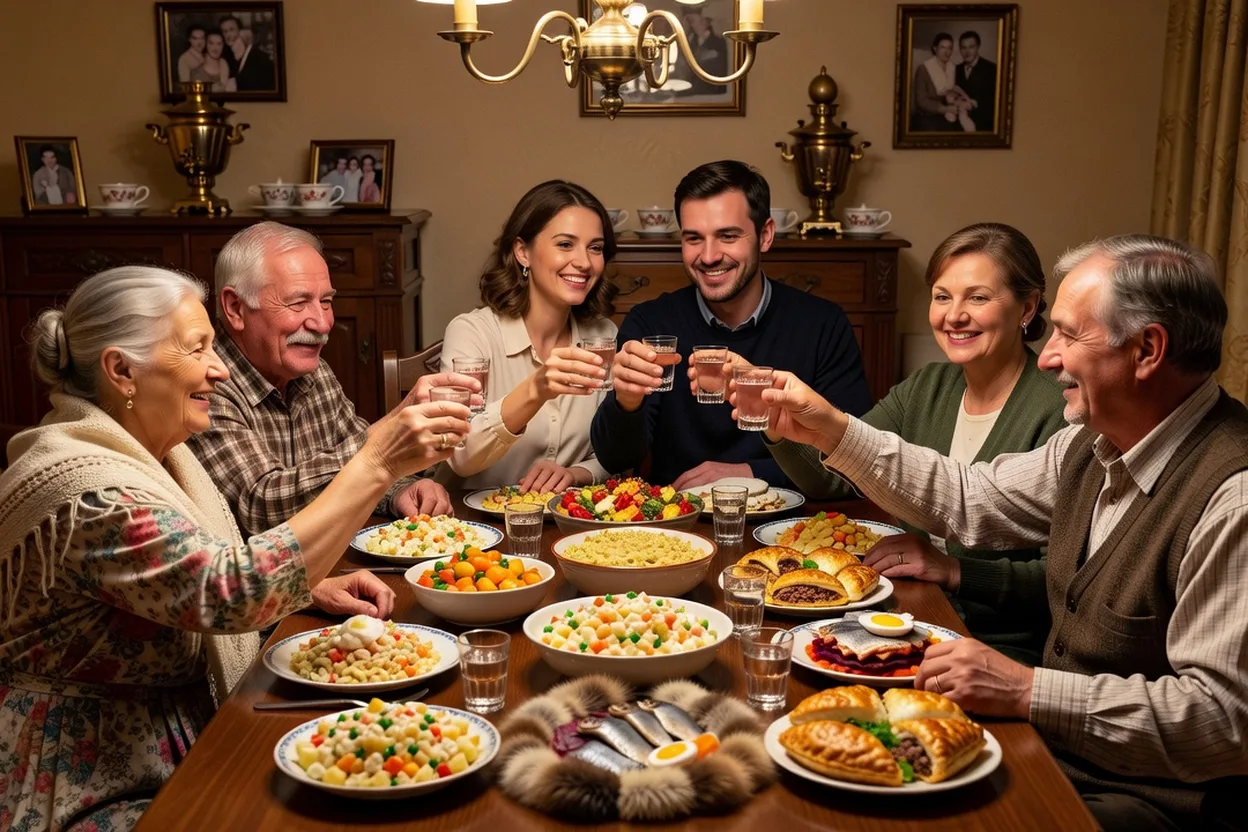
For many families in Russia and Ukraine, meeting the parents is not a formality — it is the moment a relationship becomes official. The same judgement that runs the first-meeting safety checklist applies here: prepare, tell someone your plans, and keep your own way of leaving. The good news is that the expectations are few, predictable and easy to prepare. Most of what matters fits into gifts, table manners, toasts and the way you answer the questions that will certainly come. Where that meeting happens matters too — the method of the safe meeting city guide is how most couples picked the town in the first place.
Before you arrive: the gift
A gift is expected, and it is simpler than it looks. The classic choice for the mother is a good box of chocolates, flowers (odd number of stems, and not yellow — yellow blooms are associated with parting) or a small household gift of the kind she would not buy herself. For the father, a bottle of something decent if he drinks, or a speciality from your own country. If grandparents are present, something small and sweet covers them. Wrap it; presentation matters more than price. And bring one small thing from your home country for the household — cheese, biscuits, a regional speciality — since it gives the family something to ask about.
At the table: the customs that matter
You will be fed, and refusing repeatedly can read as distance — a polite first refusal followed by acceptance is the workable middle path. Wait for the hostess to invite everyone to sit, and do not start before the toast. Toasts are the heart of the meal: the host opens, glasses are raised, and at some point the foreign guest will be invited to say a few words. Prepare two or three sentences: thank the family for the welcome, say something sincere about their daughter, and raise a glass to the evening. Delivered with a steady voice, this matters more than any gift.
During the meal, keep your phone away, take moderate portions of everything offered, and compliment the cooking — specifically, not generally (“the pies are extraordinary” lands better than “everything is lovely”). If the family pours alcohol and you do not drink, decline once with a short reason and switch to juice; a clear no is respected more than half a glass avoided all evening.
The questions you will be asked
Expect a warm interrogation: what you do, where you live, whether your intentions are serious, when the wedding is, and — often — what you think of the country, its food and its politics. The right register is honest, brief and calm. Long speeches on politics are the one trap worth avoiding; a light, respectful answer moves the conversation back to the family, which is where it belongs. If you do not understand something, ask — asking is a compliment, not a weakness, and someone at the table will happily translate.
After the visit
A short thank-you message the next day — to her, to pass on, or directly to the family if they are comfortable in English — closes the loop and is remembered. If the first visit lands in late December, expect the scale of a holiday table rather than a Sunday lunch — the holiday visit guide covers what changes and what does not. And if the visit went well, you will feel it in the way the table grew: the second invitation comes with more food, more questions and, often, the first photograph of the two of you on the family shelf. That photograph is the real verdict.
Frequently asked questions
Is a gift really expected when meeting her family?
Yes, and it is simpler than it looks. The classic choice for the mother is a box of chocolates, flowers in an odd number (and not yellow, which is associated with parting) or a small household gift. For the father, a decent bottle if he drinks, or a speciality from your country. Wrap it well, because presentation matters more than price, and add one small thing from your home country for the household.
What are the table customs that matter most?
Three. Wait for the hostess to invite everyone to sit, and do not start before the first toast. When the foreign guest is invited to speak, two or three sincere sentences — a thank-you, something true about their daughter, a raised glass — matter more than any gift. And compliment the cooking specifically rather than in general terms, since a precise compliment reads as genuine.
What if I do not drink alcohol?
Decline once with a short reason and switch to juice or water. A clear no is respected more than half a glass avoided all evening, and no one expects a guest to drink against their wish. The same applies to food: a polite first refusal followed by acceptance is the workable middle path.
What questions should I expect from the family?
A warm interrogation: what you do, where you live, whether your intentions are serious, when the wedding is, and often what you think of the country and its politics. The right register is honest, brief and calm. Long speeches on politics are the one trap worth avoiding; a light, respectful answer moves the conversation back to the family.
What should I do after the visit?
Send a short thank-you message the next day — to her to pass on, or directly to the family if they are comfortable in English. It closes the loop and is remembered. If the visit went well, the second invitation usually arrives with more food, more questions and often the first photograph of the two of you on the family shelf.